Konuşmanın Türkçesini okumak için:
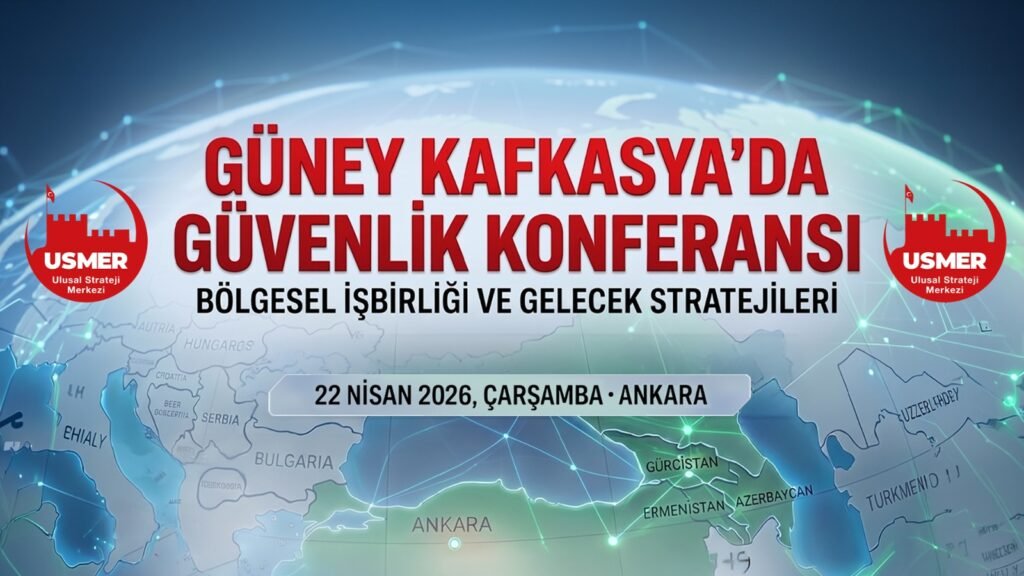
Alev Kılıç – Güney Kafkasya’da Güvenlik Konferansı Konuşması
SPEECH NOTES ON TÜRKIYE’S PERSPECTIVE TOWARDS COOPERATION AND SECURITY IN THE SOUTH CAUCASUS
· There was a bipolar world order during the Cold War in which Türkiye played a specific geostrategic role
· During the Cold War, Türkiye was the easternmost point of the West, and was thus vital in protecting NATO’s flank against the Warsaw Pact
· The end of the Cold War also meant the end of the bipolar world order and the assumptions about Türkiye’s role in the West and NATO
· The Iran Curtain is talked about in terms of dividing Europe between the West and the East. However, for Türkiye, the Iran Curtain also existed for the regions east of Türkiye. For example, during the Cold War, Türkiye could not directly talk to Azerbaijan or the Turkic republics in Central Asia, everything had to go through Moscow
· With the lifting of the Iron Curtain in the South Caucasus, the Turkic world opened to Türkiye, which provided a whole new set of opportunities and challenges for Türkiye
· At that time, Türkiye had the will to become much more involved in the Turkic world, but lacked economic and political clout to truly realize its vision for the region. By the 2000s, Türkiye begin to acquire the clout necessary to realize its goal of establishing Turkic cooperation framework in Central Asia
· In this respect, the establishment and growing institutionalization of the Organization of Turkic States (OTS) is critically important for Türkiye. OTS allows the Turkic world to present itself as a cohesive and predictable force at the world stage
· This process coincided with the shift in the global configuration of power. The end of the Cold War created a “unipolar moment” for about 30 years that saw the United States as the world hegemon. This is no longer the case, as the world is rapidly moving towards a multipolar order. Türkiye is working to position itself in this changing global order
· Today, Türkiye sits at the intersection of the West and the East. The rise of the East, exemplified best by China’s growing power, is fast becoming the political and economic hub of the world
· Türkiye is naturally situation to serve as the nexus for the flow of goods and services between the West and the East. In this respect, the South Caucasus serves as Türkiye’s gateway to the East. This gateway must be safe and stable for the connection between the West and the East to be useable
· Besides Türkiye allied and brotherly relations with Azerbaijan and its strong relations with Georgia, the 3+3 format that supported by Türkiye presents a valid formula for establishing a cooperation and security framework for the South Caucasus. Besides the region’s three countries of Armenia, Azerbaijan, and Georgia, it brings together Iran, Russia, and Türkiye as the region’s neighbors who have a stake in the well-being of the region
· The United States has entered the region as well with TRIPP, which will facilitate Azerbaijan’s access to its exclave of Nakhchivan through Armenia’s territory
· The US’ regional framework with the Central Asian countries, the C5+1, is being extended to include Azerbaijan as well, which means that we can now talk about a “C6+1”
· Türkiye does not view the US, the EU, Russia, or China as its rivals in the South Caucasus or Central Asia. History has repeatedly demonstrated that regional rivalries usually lead to conflicts with long-running negative consequences
· Instead, Türkiye views itself as an extension of the West in these regions without attributing Russia or China as a threat. Türkiye is a NATO member and an EU candidate; these are meaningful factor that impact Türkiye’s conduct in these regions