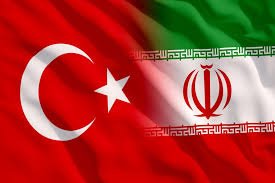
Turkey and Iran are old neighbours who have shared West Asian geography for centuries. There were times when they fought, but for the greatest part of their shared history, they lived in peace. There is no need to discuss history in detail at this point but let us suffice to remember that the Treaty of Zuhab(Kasr-ı Şirin) which was signed in 1648 and has been in operation up to the present is one of the oldest functioning peace treaties . This is a proof of a mutual good-will.
The historical and geographical similarities of Iran and Turkey have been underlined by many authors.
- The two counties underwent similar experiences in the Middle Ages;
They have similar socio-economic structures;
- They both formed great empires in the past and they have strong state traditions;
- Turks and Persians have lived together for centuries;
- They both possess intricate Islamic traditions,
- In the 19-20th Centuries, both nations waged similar struggles against
Imperialist powers and developed policies to protect their independence and sovereignty;
– They went through similar modernization processes in the 20th Century.
20th Century: nation-state building
I intend to express my thoughts in general lines.
Both Turkey and Iran had long and impressive feudal histories. Different dynasties in power in Iran all continued more or less the state tradition. Ottomans were more consistent in their sovereign family but analysed as a whole, they also had their own ups and downs.
Up to the present, most of the political analysts who have categorised the histories of both countries into different categories, nevertheless agree that they went through similar processes during 20th Century. With the historian Yann Richard’s words, “ the two countries followed an evolution parallel to each other until the end of World War II after which their paths became more distanced”[1]
It can be said that the Turkish and Iranian intellectuals had the same dreams of modernisation expressed in the 1906 Iranian Constitutional Revolution and the Turkish Young Turk Revolution of 1908 which were, up to a certain degree, in cooperation with each other. Freedom of expression, formation of a Parliament, the demand for a constitution, democratic rights, unification, patriotism were the main banners carried in the revolutionary process.
The struggle against feudal dynasties brought complicated problems but World War I which shook the whole region obliged Turkey to the eliminate the empire and the Ottoman dynasty, which led to the founding of the Republic. Many thought that Iran should go through same path but the political evolution of Iran happened to follow a different path. Historian Abrahamian describes Iran’s case as such:
“ (The book) traces the transition from feudalism into state capitalism – from a loosely knit geographical region dotted with isolated villages and tribal clans to an urbanized and integrated economy where classes jockey for power within the state. The state is no longer a separate entity unto itself hovering over society, but a large entity deeply enmeshed in society.” [2]
Let us not forget that all these processes went through hard struggles against imperialism. They both had England and Tsarist Russia as common enemies in safeguarding their existence. Independence and national sovereignty and elimination of archaic political and economic structures were the main demands of the two nations.
Strangely enough, their old enemy Tsarist Russia had converted into a socialist state which contributed to the territorial integrity, national independence and modernisation of Iran and Turkey. The Republic of Turkey acted as the representative of the Soviet Union in the Society of Nations and in foreign relations in general up to 1932. [3]
It is true that relations between Iran’s Riza Shah and Turkey’s Atatürk were close and they cooperated. They both had their ways. “The Modernisation movement (in Iran) existed even before Atatürk and it developed parallel to Turkey’s similar efforts. The real creators of Iran’s modernization movement should be searched among Iranian intellectuals” [4] On the other hand, as underlined by N. Keddie “Rıza Shah’s economic development and reform program produced some striking results in industry, transport, education, women’s and minority rights. [5]
Atatürk played a positive role in signing the Sadabat Treaty in 1936
by making efforts to bring Iraq and Iran together. The Sadabat Pact is generally underrated and seen as a local measure taken against Kurdish tribes but it is clear that the Pact reinforced peace and stability in the region and thus it should be taken as a positive example.
Turkey and Iran stayed off World War II. Iran suffered more and went through a risk of partitioning. The Post-war period had its own rules. Starting from Europe, the world had been divided by “an iron curtain”. Turkey and Iran happened to be on the same side. They were among the winners but did they gain is questionable. US Foreign minister Dulles’ anti-communist, anti-Sovietic “green belt” “northern tier” policies put two old neighbours next to each other but their collaboration with US did not make them get closer to each other; just the contrary. The Post war years of the two countries can be characterised with competition for regional supremacy
Turko-Iranian relations stayed under the shadow of Iraq’s nationalist policies after 1958 and that of the “Kurdish problem” in northern Iraq. Kurdish autonomy encouraged by the Shah and the tensions between Iraq and Iran caused concerns within Turkish leading cadres. Economic cooperation between the two countries stayed limited. They cooperated on the basis of “anti-communism” .
The Agreement between Iran and Irak in 1975 was welcomed by Turkey. However, Iran’s Islamic revolution changed Turkey’s attitude. Relations became tense; Nonetheless Turkey refused to cooperate with US in their anti-Iranian initiatives and declared that she will not open Turkish military bases to US for intervention .
After the collapse of the Soviet Union, American authorities and propaganda machines tried to provoke Turkey and Iran on the basis of who was going to be “ the model country” for Central Asia” . However, the Russian initiative which did not retard, gave an end to the competition on Central Asia[6].
In spite of the tension felt after Iran’s Islamic Revolution, there was no break in economic relations which have continued progressing. In 1985 the volume of trade reached 2 billion dollars, representing the peak point of the century[7]. Tensions diminished with the contribution of experienced leaders on both sides.
The dominant perception of Iran in Turkey after the Islamic Revolution was pessimistic and an expectancy of instability was the dominant feeling. However, pessimism was not the sole sentiment. Mr. Tuncer Topur, a retired diplomat was among the optimists. According to him “ The collapse of Shah’s regime opened Turkey’s way because US policies collapsed in the region”[8]
Turkey stayed neutral during Iran-Iraq war. By the end of 80’s, relations gained stability and realism and the need for good neighbourly relations was more deeply felt.
Main motive of rapprochement in 1990’: US intentions
Prime Minister Akbulut’s visit in 1990 was a first step for a better understanding which was reciprocated by president Rafsanjani who visited Turkey the following year. President Demirel’s visit achieved the process.
The rapprochement was generally explained by economic and energy needs by most of the Turkish authors but I believe the main element in force was US intentions on the Gulf and in the region in general. The optimism created in the public opinion after the disintegration of the Soviet Union did not last long. US ambitions soon became obvious. The First Gulf Crisis on instigated by Kuwait did not last long and yielded limited results while US intentions remained obvious.
Although the main motive was political the first steps taken were in
the economic field. Turkey-Iran Natural Gas Pipe-line agreement was signed in 1996 and it happened to be an important economic success for both parties. The Pipe-line which took about 5 years to construct, supplies a considerable amount of gas used for the national consumption of Turkey. Turkey’s import of Iranian gas started in December 2001 and new and much more ambitious projects have been actually negotiated since then.
The augmentation of separatist activities especially in Turkey alerted the authorities on both sides. The signing of “Turkey-Iran Common Security Protocol” in Tehran in October 1993[9] opened the door for better understanding.
Iran Deputy-foreign minister Eminzade’s visit to Turkey in February can
be considered a turning point in political relations. Both sides agreed on the parties’ territorial integrity and independence. Iran promised not to encourage the Kurdish separatists and Turkey promised not to protect Iran’s “Mucahidins”. The progress realised in a short period was obvious. After the signing of the “Turko- Iranian Security agreement” both governments began to attach more importance to regional policies.
By the end of 1900’s, Turko-Iranian relations entered a new era. The main factor in this rapprochement was the US. Washington’s intentions in the region pushed Iran and Turkey to cooperate more. Commander in Chief of the Turkish Army, General Kıvrıkoğlu paid a visit to Iran, which was followed by President Ahmet Necdet Sezer’s visit. The Iranian President Hatemi and the Turkish President A.Necdet Sezer reached a comprehensive agreement.
A strategic remark: Though a NATO member and an ally of the US,
Turkey did not participate in the anti-Iran campaign of the US in spite of the extensive propaganda campaign in Turkey against Iran to hold Tehran responsible for some political assassinations but the correct behaviour of the political leaders dispersed the provocative smog in time.
The words uttered by General Tuncer Kılınç, Turkey’s National Security Council General Secretary, a 4- star general, should be underlined. Pronounced in front of the press in the Military Academy, Kılınç said: “We must develop our relations with Iran and Russia and orient ourselves to progress regional policies” After this remark the National Security Policy document was reedited and the need for “regional policies” were officially emphasized. Needless to say that US intervention to Iraq accelerated and expanded this cooperation.
Turkey continued her economic cooperation with Iran in 2010’s. The
9/11 events and the US intervention to Afghanistan and Iraq created great tragedies in the region. The rejection of US initiative to invade Iraq via Turkey by the Turkish National Assembly created a positive air. The two counties were on the same side through the bloody tragedy in Iraq.
In Syria, the case is different. Having close relation with Iran, even having common cabinet meetings with the Syrian authorities for a while, Prime Minister Erdogan changed his attitude and took a negative position towards Syria. Though during the Syrian crisis Iran and Turkey were on opposite sides, happily they were careful towards each other’s moves.
Presently, Turkey, with the mediation of Russia has been giving signals to change her attitude towards Syria which may ameliorate the relations. Lifting the embargo to Iran will contribute to regional peace and prosperity.
Economic Relations
The volume of foreign trade between the two countries which was about 1 billion $ in 1996 surpassed 10 billion $ in 2010. This is essentially due to Turkish import of natural gas. The volume of trade reached about 15 billion $ in 2013. The problem is the unbalanced relation. Turkey has a big deficit.
Turkey-Iran trade figures ( 000$) [10]
Years Export Import Volume TR Deficit
2000 236.000 816.000 1.051.500 – 580.000
2005 913.000 3. 470.000 4.383.000 – 2.557. 000
2010 3. 044.000 7. 645.000 10. 689.000 – 4. 600.000
2013 4. 193.000 10. 383.000 14. 576.000 – 6. 190.000
2014 3. 387.000 9. 833.000 13.720.000 – 5.946.500
Observing the transformation in Iranian economy, experts point at the big opportunities in tourism, energy, banking, the petro-chemical industry, telecommunication, transportation and the automotive sector. It is possible for Turkey and Iran to cooperate in the Caspian and Black Sea transportation. Cultural relations are unfortunately very limited, which points at the necessity to augment relations in this area, for, an atmosphere of better understanding between our peoples can only be realised through cultural contacts of all sorts including sports.
Conclusion :
The two countries had to go through difficult years the experience of which taught them precious lessons. 21st Century can be an era of prosperity, peace and cooperation for Turkey and Iran.
- Turkey and Iran have a much in common. Geography, history and culture are the main elements of these relations.
- Turkey and Iran followed about the same path to eliminate the feudal empires and to progress towards modernisation.
- Turkey and Iran founded their nation-states, were successful in modernisation and followed their own way.
- 21st Century has placed huge problems in front of Turkey and İran. West Asia is bleeding. It is for the peoples of the region to stop the bleeding, to resist the hegemonistic aims of the great forces and especially of US. The peoples of this region, Turks, Persians, Arabs and others have to create new ways among which regional cooperation has the prime importance.
- Turkey and Iran can be the initiators of the “West Asian Union Project”. With the cooperation of SCO, West Asian Union can contribute to the peace, harmony, stability and prosperity in Eurasia.
- Turkey and Iran both form the historical bridge in between Asia and Europe. Turkey will be the western window of this entity with ties to Europe and Iran will be the eastern window opening up to Asia via India and Central Asia. Mediterranee and Indian Ocean will enlarge the windows.
B i b l i o g r a p h y
Abrahamyan, Ervand, (A History of Modern İran), Modern İran Tarihi, Türkiye İş Bankası Yayınları, İstanbul 2008,
Akşin Sina, 20. Yüzyıl Tarihi, Türkiye İş Bankası Yayınları,
Dieth, Gulchan, New Threats to Oil and Gas in West Asia: Issues in India’s Energy Security www.idsa.in.strategic analysis_gdietl_0904 pdf
Gürakar, Tolga, Türkiye ve İran, Kaynak Yayınları, İstanbul 2012
Keddie, Nikki, Rooots Of Revolution, Yale University Press,, 1981
Oran, Baskın (ed), Türk Dış Politikası, I-II, İletişim Yayınları
Perinçek Mehmet, Atatürk’ün Sovyetler’le Görüşmeleri, Kaynak Yayınları, İstanbul 2011
Polat, Soner; Türkiye İçin Jeopolitik Rota, Kaynak Yayınları, İstanbul 2015
Jann Richard, Kemalizm et Iran, in Kemalism et le Monde Musulman, (ed) İskender Gökalp ve François Georgeon, (Kemalizm ve İslam Dünyası) Kaynak Yayınları, İstanbul 2007
Roy, Olivier, La Faillite de l’Islam Politique, Metis Yayınları, İstanbul 1994
Sander, Oral, Siyasi Tarih II, İmge yayınları,
Tuncer Hüner, Özal’ın Dış Politikası, Kaynak Yayınları, İstanbul 2015
Tuncer Hüner, Küreselleşme Döneminde Türk Dış Politikası, Kaynak Yayınları, İstanbul 2016
Yılmaz ,Hadiye; Kurtuluş Savışımız ve Asya-Afrika’nın Uyanışı, Kaynak Yayınları, İstanbul 2007
US Energy Information Administration, International Energy Data + Analysis, June 2015
[1] Yann Richard, Kemalisme et Iran, in Kemalism et Le Monde Musulman; ed. İ.Gökalhp-F.Georgeon) Kaynak Yayınları, s. 79
[2] E.Abrahamian, A History of Modern Iran, Introduction, pdf, adobe
[3] Mehmet Perinçek, Atatürk’ün Sovyetler’le Görüşmeleri, pp 164-233
[4] Jan Richard Kemalism et İran, in Kemalizm et le Monde Musulman (ed, İ.Gökalp-F.Georgeon), p.89
[5] N. Keddie, Roots of Revolution, p. 112
[6] Baskın Oran (ed), Türk Dış Politikası, p. 583
[7] Hüner Tuncer, Özal’ın Dış Politikası, s.53
[8] Aydınlık, 11.02 2007
[9] Dr. Hüner Tuncer, Küreselleşme Döneminde Türk Dış Politikası, s.43
[10] TUİK